Two common routes from brief to building contract, each with real strengths. How architect-led tendering and design and build compare, and how to decide which suits your project.
For an individually designed home, there are two common ways to take a project from brief to building contract, each with its own variations. The first is the traditional route: appoint an architect, develop and document the design, then invite several builders to tender. The second is design and build, where the builder is involved from the outset and leads the process alongside the design team.
The term design and build is used in different ways. Some companies provide design in-house; others, including AP Designer Homes, work with independent architects and building designers.
Both can produce an exceptional home, and both can go wrong. The right choice depends less on which model is better in principle than on your priorities, your design team and how much cost certainty you need, and when.
The architect works directly for you to develop the design and documentation, typically through planning approval and detailed construction drawings. Once the documentation is complete, it is issued to a selection of builders who each price it. You compare the tenders, select a builder and enter a building contract, and the architect may continue to administer that contract during construction.
The strengths of this route are real. The design is developed independently of any builder, the architect acts on your behalf through to completion where engaged to do so, and a competitive tender gives you a direct comparison of price on the same documents.
Under design and build, the builder is engaged early and manages the process from the initial planning stage. With AP Designer Homes, design remains with the architect or building designer; we do not provide architectural or building-design services ourselves. What changes is that construction knowledge, cost planning and buildability input are part of the process from the first sketches, and design, documentation and construction are coordinated as one connected process.
Where appropriate, the early work proceeds under a Preliminary Services Agreement. Pricing can be tested at concept stage as a guide, then refined as documentation and selections are resolved, so that by the time a building contract is prepared the price reflects the home that has actually been chosen.
In broad terms, the two routes compare as follows. Individual projects, appointments and contracts vary.
| Consideration | Architect and tender | Design and build |
|---|---|---|
| When the builder joins | Typically after detailed documentation, although earlier involvement is possible | Typically during early planning or design |
| Cost feedback during design | From the architect or a quantity surveyor, where engaged | From the builder, as the design develops |
| Price comparison | Several builders price the same documents | One builder, with pricing tested and refined through design |
| Buildability input | Generally at tender, once the design is largely fixed | Throughout design and documentation |
| Coordination | Led by the architect, with the builder appointed at tender | Led by the builder, alongside the design team |
| Main risk | Tenders may exceed the budget after design fees are spent | Committing to a builder before the final price is known |
Neither column is free of risk. The question is which risks you would rather manage.
Tendering suits projects where the design is the overriding priority and the client wants it developed entirely independently before any builder is involved. It suits clients who place a high value on a competitive price comparison, and projects led by an experienced architect who will document thoroughly and administer the contract.
It works best when the documentation is genuinely complete. Tender prices are only as reliable as the information they are based on. Where selections are left open or details are unresolved, builders must make assumptions or rely on provisional sums and allowances, and the lowest tender is not always the lowest final cost.
Design and build tends to suit clients who want cost clarity during design rather than after it, and who would rather resolve budget questions while the design can still respond. It suits complex or constrained sites, where buildability and sequencing shape the design itself, and knockdown and rebuild projects, where demolition, approvals and construction need to be planned together.
It also suits clients who want one point of leadership. Rather than coordinating the architect, engineer, consultants and builder themselves, they have the project team coordinated around them.
Its main demand is trust in the builder you choose, because you are choosing them before the final price is known. That makes the early stages important: how openly cost is discussed, how pricing is tested, and whether the builder will price from resolved documentation rather than an early figure.
The two approaches are not always as separate as they appear. Many of our clients have already appointed an architect or building designer before they speak with us, and that is a perfectly good starting point. We work comfortably alongside existing design teams, contributing construction input while the design continues to develop with the professionals already engaged.
Some architects also bring a builder in early through a negotiated tender or early contractor involvement, which combines elements of both approaches.
What matters most is not the label on the process, but whether construction knowledge is available while the important decisions are being made.
In either model, the best results come from the same things: a resolved design, complete documentation and a builder who understands the home before pricing it.
If you would like to talk through which approach suits your project, you can read more about our design and build approach, how we build custom homes in Adelaide and how we work from first conversation to handover.
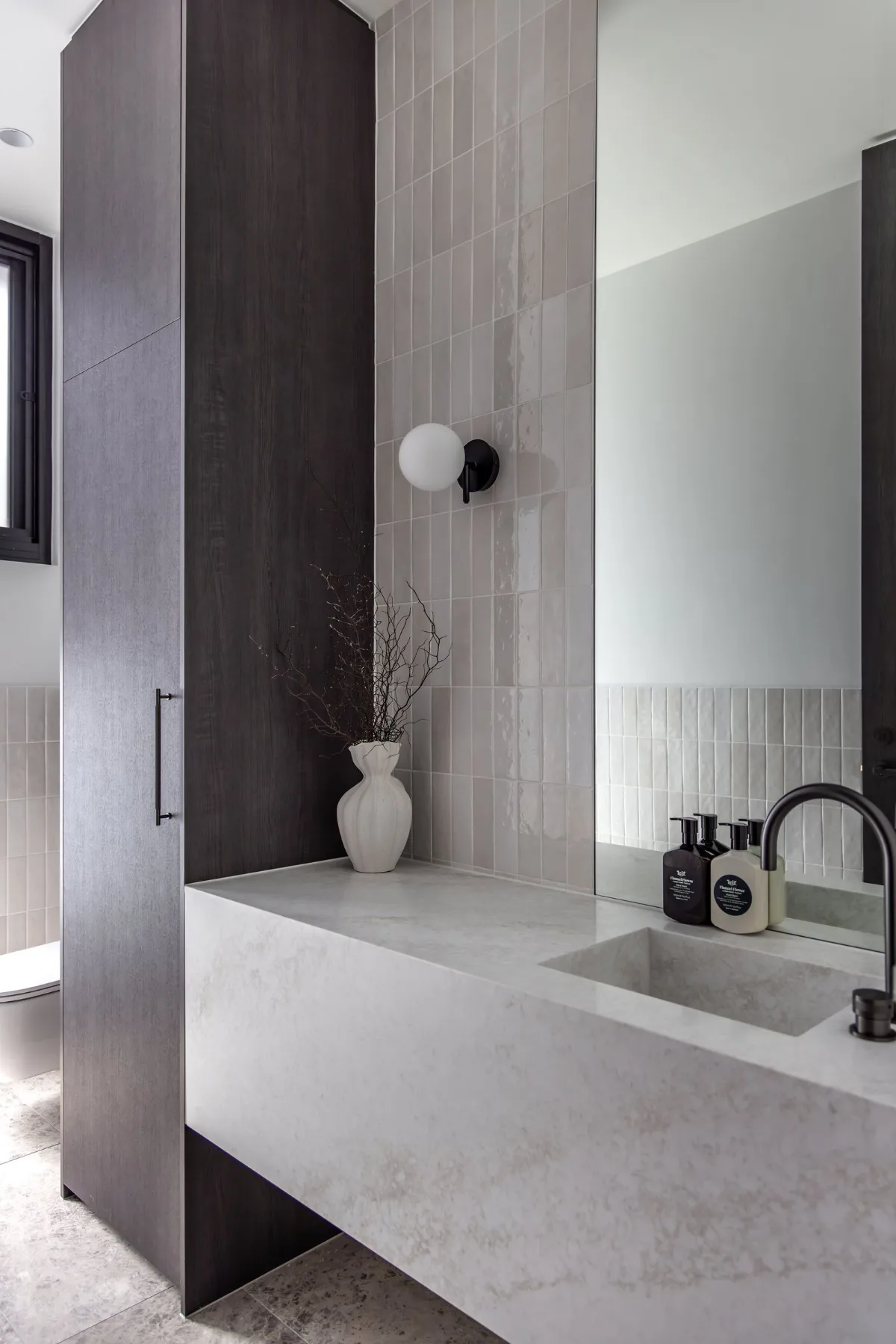
9 Netherby was delivered by AP Designer Homes as a design and build project and recognised as a finalist in the 2025 Master Builders Awards.
How AP Designer Homes approaches this kind of project, from early planning and pricing through to construction and handover.
Tell us about your site, your brief, where the design is up to, your construction budget and your timing. We will give you an honest view of whether the brief and the budget are aligned, and whether AP Designer Homes is the right fit.