Earlier than most people expect. Why the timing of a builder's involvement shapes the design, the budget and the price, and what that involvement looks like at each stage.
Most people assume the builder arrives at the end of the design process: once the drawings are finished, the approvals are in place and the project is ready to price. For many homes that sequence works well enough. For an individually designed home, it often leaves the most important cost and buildability questions until the point where they are hardest to act on.
Our view is straightforward. The earlier a builder is involved, the more useful that involvement can be. That does not mean there is only one right moment, and it does not mean the builder takes over the design. It means construction knowledge is available while decisions are still being made.
Most of the cost of a custom home is determined by decisions made during design, rather than on site. The size and shape of the home, the structure, the way it sits on the site, the glazing, the materials and the level of detail are largely settled before anyone prices it. By the time documentation is complete, each of those decisions has been drawn, engineered and often approved.
If the price then comes back above the budget, the options are usually limited: reducing the scope, redesigning and re-documenting and, in some cases, seeking an amended approval, each with its own fees and time. Early involvement does not remove the need for difficult decisions. It allows them to be made while they are still less costly to make.
With a site and a brief, a builder can help test whether the two are aligned with the intended budget. On established Adelaide sites, that often means looking at access, levels, existing services, neighbouring structures and, where a house is being replaced, demolition considerations. Where a design team is not yet in place, we can also help bring the right architect or building designer, engineer and consultants together.
This is where early involvement tends to be most valuable. The broad form of the home is taking shape, but little has been fixed. Buildability, structural approach, construction methodology and the cost of key material choices can all be raised while the design team still has room to respond. Pricing can be tested at concept stage, as a guide rather than a contract price, to confirm the project is heading in the right direction, then refined as documentation and selections are resolved.
As the drawings develop, the questions become more detailed: how junctions will be built, how the engineering and consultant information fits together, and which selections need to be confirmed before pricing. Coordinating joinery, fixtures and finishes alongside the documentation means the construction proposal reflects the home that has actually been chosen, with as few provisional sums and allowances as possible.
Bringing a builder in at this point is still a valid starting point, and many clients come to us with an architect or building designer who has already taken the design a long way. Here our role is to review the project carefully, understand what has been resolved and identify what is still required before accurate construction pricing can begin.
Early involvement is not about simplifying the architecture. It is about understanding how the design will be built, so the decisions made on paper remain achievable on site.
It is a reasonable concern, and one we hear from clients and design professionals alike. The answer depends on how the roles are set up.
Design remains with the architect or building designer. AP Designer Homes does not provide architectural or building-design services, and we are not there to redraw the home. Our role is to bring building knowledge into the process: what the site will demand, how the structure and details are likely to be built, and what the design is likely to cost to deliver. Many designers welcome that input, because it helps protect the design from late redesign once the price arrives.
The alternative is often harder on the design, not easier. When a fully documented home comes in over budget, savings often have to be found quickly, and they are frequently found in the very elements that gave the home its character.
We prefer to become involved from the initial planning stage, and to manage the overall process for our clients from the outset. Where appropriate, that early work proceeds under a Preliminary Services Agreement, allowing us to remain involved as the design develops and before a building contract is in place.
Once the documentation, scope and key selections are resolved, we prepare a detailed construction proposal, with a preference for a fixed-price contract. You can read more about our design and build approach, about how we work from first conversation to handover, and about knockdown and rebuild projects, where early planning matters because demolition cannot be reversed.
In each case the first step is the same: a conversation about the site, where the design is up to, your timing and what you want the home to achieve.
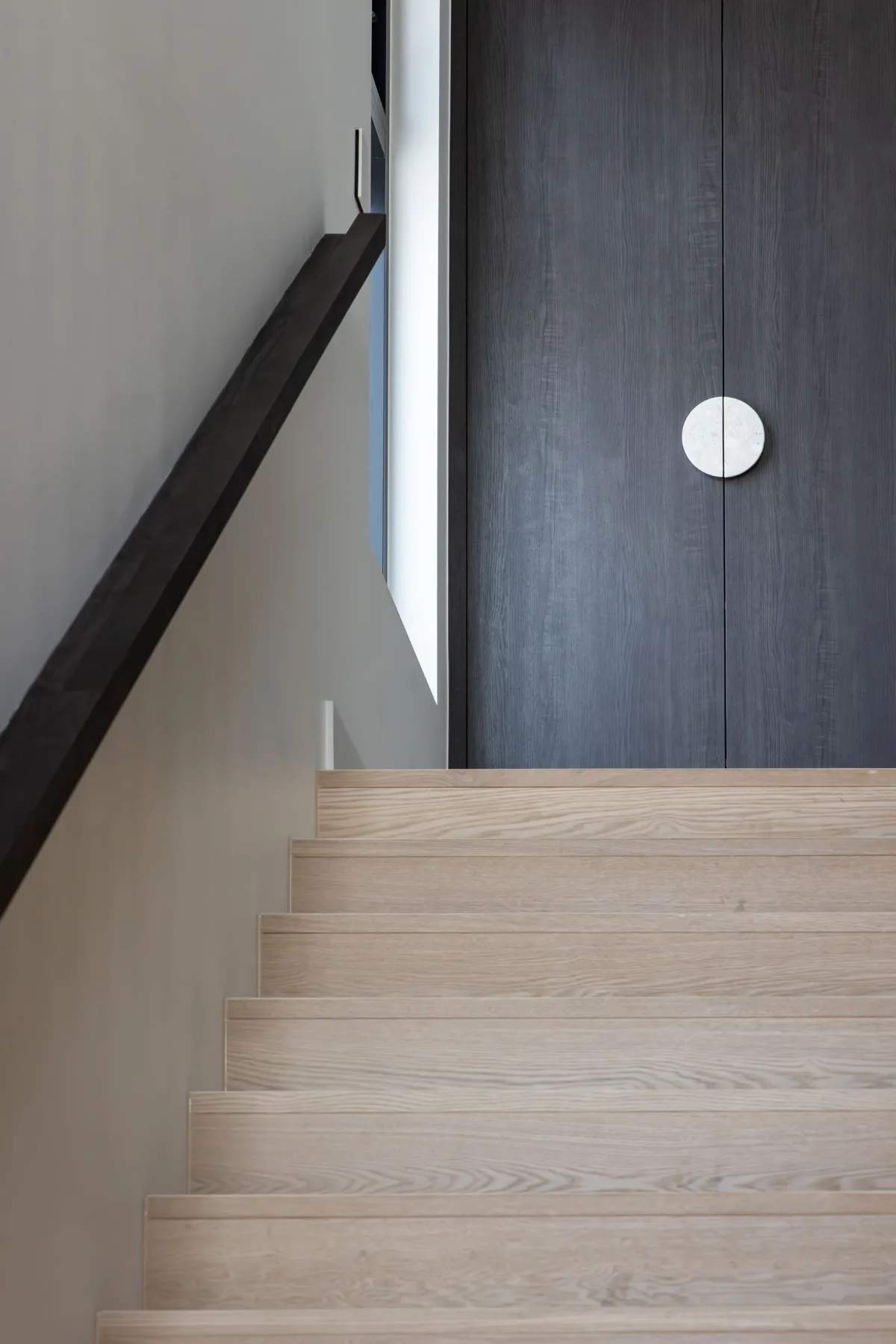
A completed knockdown and rebuild, originally intended as our family home, and a 2025 Master Builders Awards finalist.
How AP Designer Homes approaches this kind of project, from early planning and pricing through to construction and handover.
Tell us about your site, your brief, where the design is up to, your construction budget and your timing. We will give you an honest view of whether the brief and the budget are aligned, and whether AP Designer Homes is the right fit.